
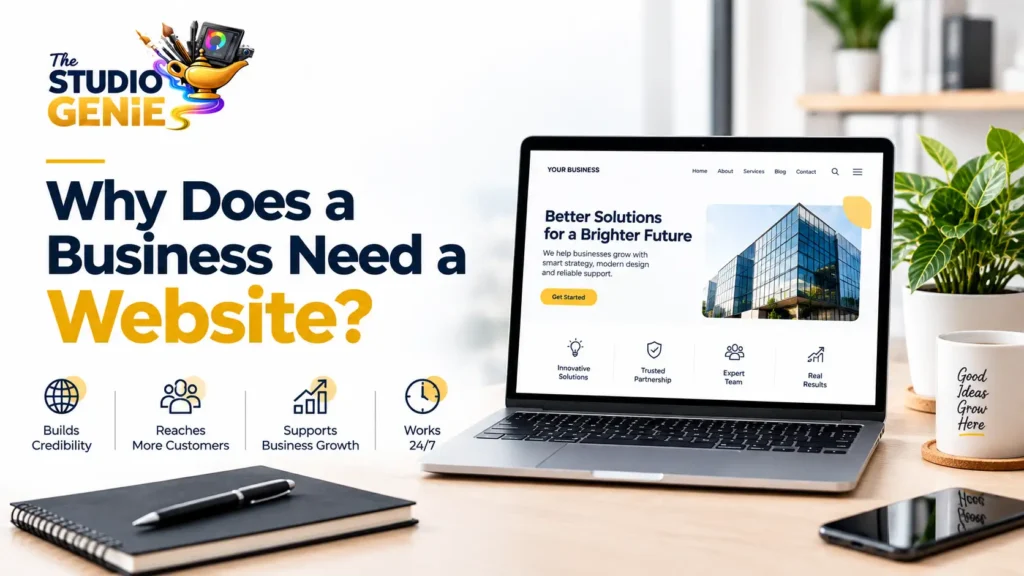
A business needs a website because a website gives customers a reliable place to find information, evaluate credibility, contact the company, and take action. A website also supports Google visibility, lead generation, digital marketing, and long-term control over your online presence.
Social media, online listings, email marketing, and advertising can attract attention, but those channels do not replace a dedicated business website. A focused website brings important information together and gives customers a clear path from research to contact or purchase.
Why Does a Business Need a Website?
A website gives your business a controlled online presence that customers can access at any time. Customers can learn about your services, products, location, pricing, experience, policies, and contact options without depending on social media.
A professional website design can support several business goals at once. The same platform can attract search traffic, explain your offer, generate leads, support advertising, publish useful content, and strengthen your brand.
For small businesses, a website does not need to be large. A clear homepage, service or product pages, About page, contact page, and relevant supporting content can create a strong foundation.
Builds Credibility and Trust
A professional website helps customers assess whether your business is legitimate, established, and suitable for their needs. Clear information, consistent branding, testimonials, case studies, portfolio examples, team details, and accessible contact information can strengthen trust.
Website quality matters because confusing navigation, outdated information, slow performance, or poor mobile usability can weaken the customer experience. Your website should present accurate information and make important actions easy to complete.
Helps Customers Find You on Google
A website gives Google structured content that can be crawled, indexed, and potentially ranked for relevant searches. Search Engine Optimization (SEO) helps your website target queries related to your services, products, locations, and customer needs.
You can create dedicated pages for important services, locations, products, and questions. Strong headings, useful content, internal links, descriptive metadata, and relevant structured data help search engines understand the purpose and context of your website.
SEO does not guarantee rankings, but a website provides the foundation required for long-term organic search visibility.
Generates Leads and Sales 24/7
A website can generate business opportunities outside normal working hours through contact forms, quote requests, booking systems, product pages, and checkout functionality. Clear calls to action guide visitors toward the next step.
A plumber can provide service areas and emergency contact details. A salon can offer service information and online booking. A consultant can collect consultation requests. An online retailer can accept orders through e-commerce functionality.
Your website can answer common questions before customers contact your team, which can reduce repetitive inquiries and help qualified visitors make decisions faster.
Gives You Control Over Your Online Presence
Your business controls the website structure, content, branding, navigation, and customer journey. Social media platforms remain useful for discovery and engagement, but platform policies, algorithms, features, and visibility can change without your control.
A website gives your business a stable destination for traffic from social media, online listings, email marketing, and paid advertising. You can update pages, publish content, improve calls to action, and change your offers without rebuilding your entire online presence elsewhere.
Supports Digital Marketing
A website provides a central destination for digital marketing campaigns. Social media posts can direct users to relevant pages, email campaigns can send subscribers to offers or resources, and advertising can send prospects to focused landing pages.
Website analytics can help you measure visits, form submissions, bookings, purchases, and other conversion actions. These insights can show which pages and channels contribute to business goals.
Your website can support SEO, social media marketing, email marketing, content marketing, local marketing, and paid campaigns from one controlled platform.
Helps You Compete
A website can help smaller businesses compete for attention when competitors already provide detailed online information. Customers can compare services, expertise, pricing, locations, reviews, and contact options before choosing a provider.
Your website can highlight specific strengths through service pages, project examples, testimonials, frequently asked questions, and useful educational content. A focused website can communicate why your business fits a customer’s needs without relying entirely on a social profile.
Website vs Social Media for Business
A website and social media have different roles. Social media can help your business reach audiences, encourage engagement, and distribute content. A website provides greater control over detailed information, search visibility, lead capture, and conversion.
The best approach for many businesses is to use social media to attract attention and use the website to provide deeper information and encourage action. Customers can move from a post to a service page, product page, booking form, or contact page.
What Should a Business Website Include?
A business website should include clear navigation, mobile-friendly design, accurate contact information, relevant service or product pages, strong calls to action, secure technology, and useful content.
Depending on your business, useful features may include:
- Homepage and About page
- Service or product pages
- Contact or quote form
- Booking functionality
- Testimonials or case studies
- Location and business hours
- Basic SEO setup
- Analytics and conversion tracking
Do not add features simply because other websites have them. Choose functionality based on customer needs and business objectives.
When Should a Business Invest in a Website?
A business should invest in a website when online visibility, credibility, leads, sales, or long-term growth matters. A new business can establish its online presence early, while an established company can use a website redesign to fix weak visibility, usability, or conversion performance.
The right starting point is a focused website that supports current business goals. Additional pages, content, e-commerce features, or marketing integrations can be developed as requirements grow.
At The Studio Genie, the goal is not simply to put a website online. Effective web design should give your business a clear, useful, professional platform that supports customers and measurable growth.
A well-planned website can grow with your business, support changing customer needs, strengthen marketing efforts, and create more opportunities to turn online visitors into qualified prospects, bookings, inquiries, sales, or customers over time for business.
Frequently Asked Questions
Do I really need a website for my business?
Yes, a website gives your business credibility, search visibility, customer information, and direct lead-generation opportunities. A website also gives you control over branding, content, contact options, and customer journeys instead of depending entirely on third-party social platforms.
Why would a business not have a website?
A business may avoid a website because of budget concerns, limited technical knowledge, or reliance on social media. However, those choices can limit search visibility, customer information, lead generation, and control over the business’s online presence.
Why does every business need a website in 2026?
Yes, a website remains a strong foundation for online visibility, credibility, SEO, marketing, and customer access in 2026. Businesses can connect social media, advertising, email, and online listings to website pages that provide detailed information and encourage measurable actions.
What are the downsides of having a website for my business?
The main downsides include development costs, maintenance, security, hosting, content updates, and technical management. These responsibilities are manageable when your website has an appropriate scope, reliable hosting, secure software, clear ownership, and a practical maintenance plan.